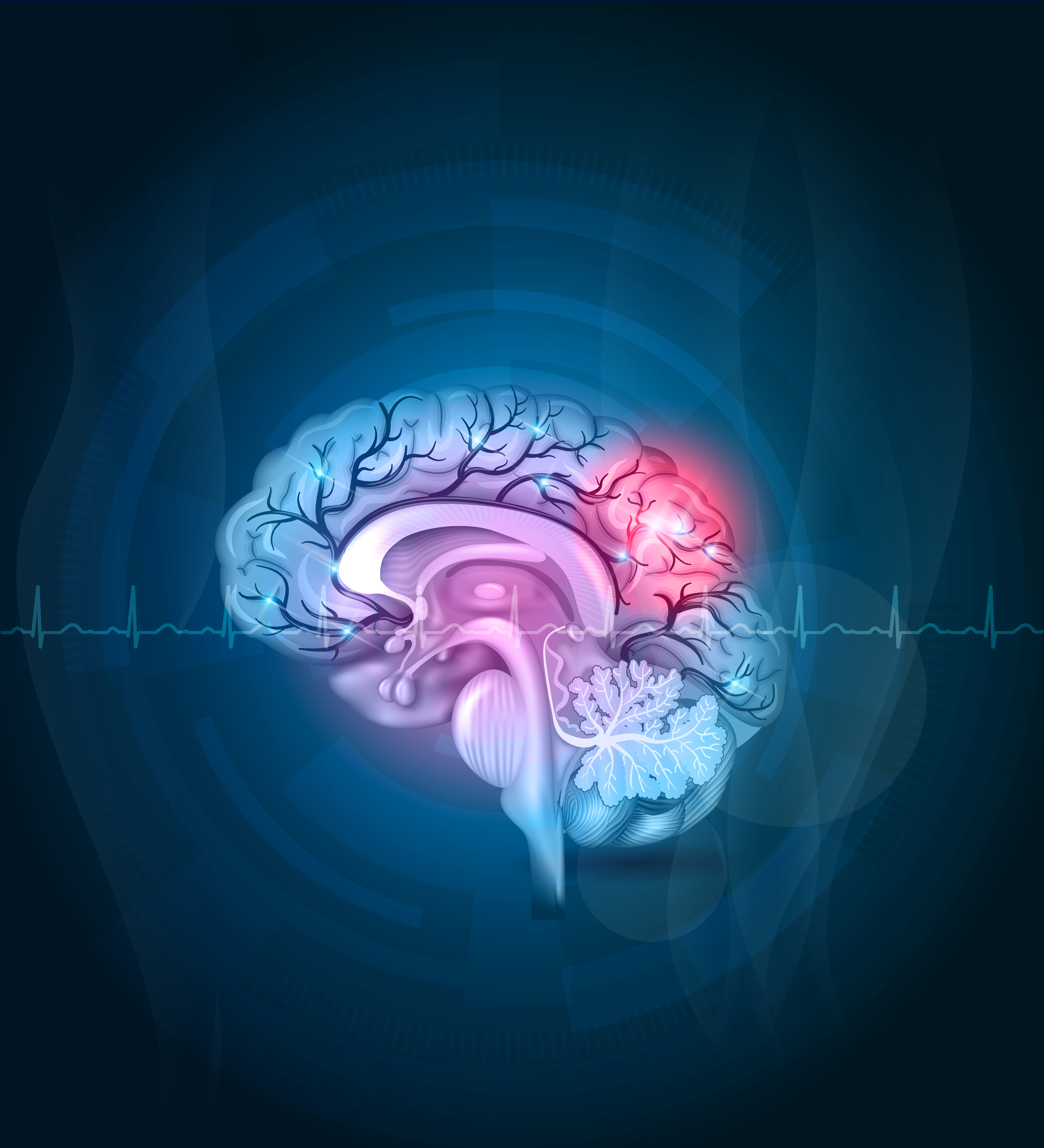
Stroke and Stem Cells
Strokes are caused when the blood supply to the brain is cut off. Bleeding in the brain or a clot in the artery supplying blood to the brain are the two leading causes.[1] When the brain is starved of blood, it is starved of oxygen which leads to cell death.
A stroke is a serious medical condition which requires immediate medical attention. If you think someone is having a stroke you need to act FAST:
F – Face; the face may be droopy on one side
A – Arms; numbness or weakness may prevent the affected person being able to lift both arms up
S – Speech; may be slurred or incomprehensible
T – Time; is of the essence[1], call 998 immediately if you see any of these signs or symptoms.
Stroke Facts
- 11.9 million new cases of stroke occurred globally in 2021.[2]
- Stroke was the third leading cause of death and disability globally in 2021.[2]
- Over the last 20 years, the lifetime risk of stroke has increased by 50 %.[2]
- Annually, the global cost of stroke is estimated to be over US$890 billion (AED 3.2 trillion)[3]
- Strokes occurs in 1:4,000 live births[4]
- Strokes are one of the top ten causes of death in children[4]
- Permanent neurological deficits will affect 50-80% of children who survive stroke[4]
Stroke and Cord Blood and Stem Cells
There are currently 101 clinical trials investigating the application of stem cells to treat strokes.[5] The potential of cord blood stem cells in the treatment of stroke is exciting. Not only is cord blood easily collected and stored, but it is rich in a wide variety of cells which enhances their ability to bring under control multiple areas which have been affected by neurodegenerative processes. While it is not yet fully understood how cord blood stem cells are able to effect change, they have been shown to decrease infarct size post stroke and assist functional recovery.[6]
Scientists at Duke University, North Carolina are testing the effect of cord blood on sufferers of adult ischaemic stroke. 100 patients between 18-90 will undergo transfusions after suffering a stroke then be monitored for results. In limited trials so far, patients have recovered motor function and speech ability after stem cell treatment.[7]
The therapeutic potential of umbilical cord blood stem cells is great with one scientific review concluding “[Human umbilical cord blood] transplantation is a promising treatment for perinatal and adult ischaemic brain injury. The major advantages of [cord blood] cells are their availability, safety, immaturity, and heterogeneous properties.”[8]
References
- https://www.nhs.uk/conditions/stroke/
- https://www.who.int/news-room/fact-sheets/detail/stroke
- Feigin, V. L., Brainin, M., Norrving, B., Martins, S. O., Pandian, J., Lindsay, P., F Grupper, M., & Rautalin, I. (2025). World Stroke Organization: Global Stroke Fact Sheet 2025. International journal of stroke : official journal of the International Stroke Society, 20(2), 132–144. https://doi.org/10.1177/17474930241308142
- https://www.stroke.org/en/about-stroke
- https://www.stroke.org/en/about-stroke/stroke-in-children
- https://clinicaltrials.gov/ct2/results?term=stem+cell+stroke&Search=Search
- http://link.springer.com/chapter/10.1007%2F978-3-319-11481-1_5
- https://med.stanford.edu/news/all-news/2016/06/stem-cells-shown-safe-beneficial-for-chronic-stroke-patients.html
- http://www.lib.okayama-u.ac.jp/www/acta/pdf/66_6_429.pdf
- Springer Series in Translational Stroke Research. Springer, Cham. https://doi.org/10.1007/978-3-319-11481-1_5
- Stem cells translational medicine, 7(7), 521–529. https://doi.org/10.1002/sctm.18-0008
- Journal of neurosurgery, 1–11. Advance online publication. https://doi.org/10.3171/2018.5.JNS173147
The information contained in this article is for information purposes only and is not intended to replace the advice of a medical expert. If you have any concerns about your health we urge you to discuss them with your doctor.