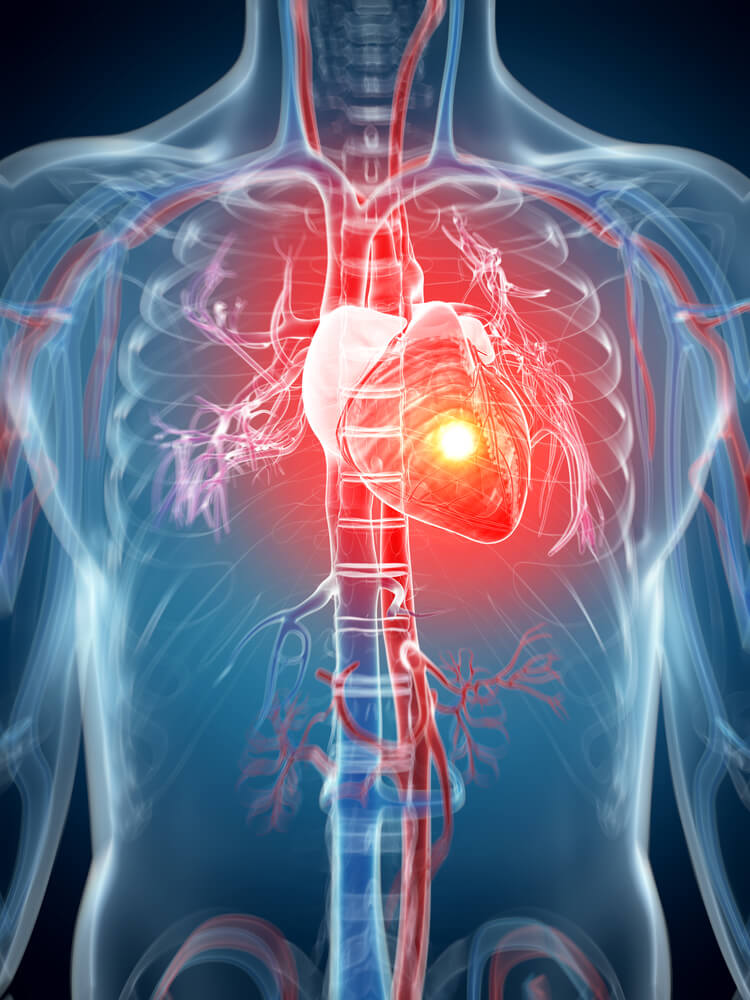
Heart Attack and Stem Cells
Myocardial infarction, more commonly known as a heart attack, commonly occurs due to coronary heart disease and the arteries in the heart becoming blocked with plaques of cholesterol. This blockage restricts blood flow and oxygen to the heart resulting in serious damage to the heart tissue; if not treated urgently myocardial infarction can be fatal.[1]
Cardiovascular Diseases, including heart attack, are the leading cause of death each year, globally.[2]
In 2022, cardiovascular diseases were responsible for an estimated 19.8 million deaths worldwide, accounting for around 32% of all deaths globally. Of these, about 85% were caused by heart attacks and strokes.[2]
Heart Attack Facts
- One in five heart attacks are silent, with the person being unaware that they suffered one [3]
- Between 7.7 and 17.6% of people who were admitted to hospital with a heart attack die within 30 days [4]
- Survival rates for heart attacks are between 90% and 97% [5]
- Women have a higher risk than men of dying in the weeks following a heart attack.[5]
- A 2017 study found that, after a heart attack, people aged 65 and over were around three times more likely to die than those aged 18–64.[5]
Heart Attack and Stem Cells
One major flaw of the human body is the inability of the heart to naturally repair cardiac muscle which has been lost, leaving millions vulnerable to heart failure around the world.[56,]
However, researchers believe stem cells may have the ability to repair the damage caused by heart attacks. While the stem cells acquired from an ageing body may have limited benefit, cord blood stem cells offer much greater promise.
A study by the University of Bristol, UK, found that heart muscle-like cells developed from human umbilical cord blood derived stem cells could help repair the cells in heart muscle which becomes damaged because of a heart attack.
Professor Ascione, who led the study, said: “We believe our study represents a significant advancement and overcomes the technical hurdle of deriving cardiac muscle-type cells from human cord blood. The method we have found has the attributes of simplicity and consistency. This will permit more robust manipulation of these cells towards better cell homing and cardiac repair in patients with myocardial infarction.
“Our research suggests that in the future stem cells derived from cord blood bank facilities might be used for repair after a heart attack.”[6]
References
- https://www.nhs.uk/conditions/heart-attack/
- https://www.who.int/news-room/fact-sheets/detail/cardiovascular-diseases-(cvds)
- https://www.cdc.gov/heart-disease/data-research/facts-stats/index.html
- https://www.beckershospitalreview.com/cardiology/hospitals-with-highest-lowest-30-day-mortality-rates-for-heart-attack-patients/
- https://www.verywellhealth.com/how-to-survive-a-heart-attack-1745323
- www.sciencedaily.com/releases/2011/10/111013103647.htm
- http://www.ncbi.nlm.nih.gov/pmc/articles/PMC3586268/
- Circulation, 126(5), 551–568. https://doi.org/10.1161/CIRCULATIONAHA.111.086074
- Circulation research, 121(10), 1192–1204. https://doi.org/10.1161/CIRCRESAHA.117.310712
- Circulation research, 123(2), 266–287. https://doi.org/10.1161/CIRCRESAHA.118.311217
The information contained in this article is for information purposes only and is not intended to replace the advice of a medical expert. If you have any concerns about your health we urge you to discuss them with your doctor.