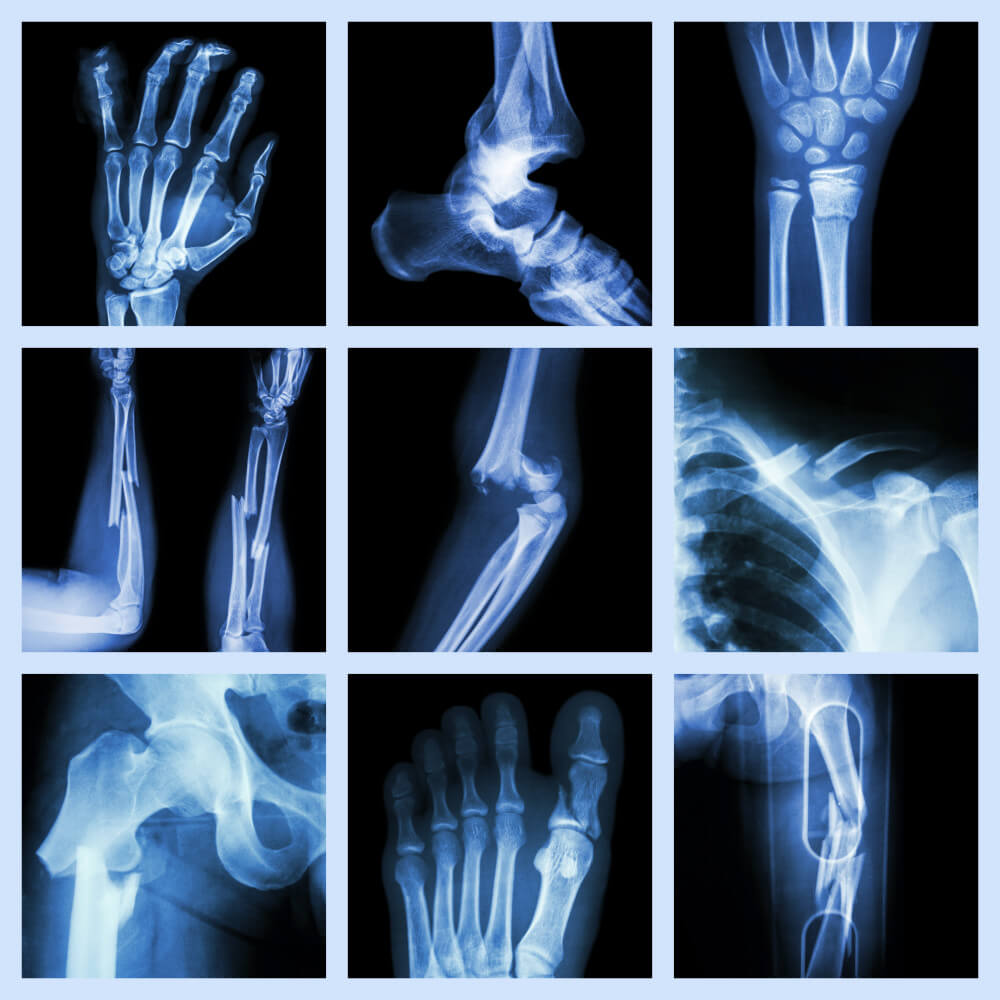
Bone Fractures and Stem Cells
Most people will suffer a fracture at some point in their life and, thanks to modern medicine, they generally heal without any problems. Typically, bone fractures are expected to heal within 3 to 4 months. Problems can arise, however, when the bones show no sign of healing after 3-6 months; this is known as non-union.[1]
Worldwide, there were approximately 173 million newly reported fractures in 2021.[2] The incidence of non-union accounts for 1.9% of fractures, however, it is disproportionate in leg fractures, ranging from 5.4% to as high as 26% depending on the bone broken and the severity of the fracture.[3] Fragility fractures currently place an estimated $400 billion (AED 1.4 trillion) burden on healthcare systems worldwide, and this cost is expected to double by 2050.[4]
Bone Fracture Facts
- By 2050, the worldwide incidence of hip fracture in men is projected to increase by 310% and 240% in women [5]
- Worldwide, 1 in 3 women over age 50 will experience osteoporotic fractures, as will 1 in 5 men aged over 50 [5]
- Nearly 75% of all hip fractures occur in women [5]
- Global estimates suggest that hip fractures affect approximately 10 million people each year. [5]
- In white women, the lifetime risk of hip fracture is 1 in 6, compared with a 1 in 9 risk of a diagnosis of breast cancer [6]
Bone Formation and Stem Cells
Researchers in Southampton have performed hip surgery using a 3D printed hip and bone stem cell graft. The hip implant was created using the patient’s CT scan and CAD CAM technology to create a tailor made hip from titanium. A graft containing the patient’s own stem cells was inserted between the pelvis and implant. The graft provides stem cells which will encourage bone regeneration in the area surrounding the implant allowing it to fuse together.[7]
Elsewhere, a team of researchers has developed a new strategy to combat the low survival rate of transplanted stem cells. Using porous transplantable hydrogels which have been embedded with stem cells the team has been able to improve the survival rate of the transplanted stem cells and improve bone repair, experimentally. Additionally, in animal experiments, the team has found that a void-forming hydrogel with the right properties provided better bone regeneration than the transplantation of stem cells alone. It was also found that the stem cells within the hydrogel amplified their regenerative efforts by stimulating surrounding native stem cells to execute bone repair.[8]
References
- http://patient.info/doctor/complications-from-fractures
- Yan, J., Li, F., Zhou, J., Ding, Y., Qin, Q., & Jin, C. (2025). The global burden of fractures and its underlying etiologies: results from and further analysis of the Global Burden of Disease Study 2021. Archives of osteoporosis, 20(1), 111. https://doi.org/10.1007/s11657-025-01596-3
- https://pmc.ncbi.nlm.nih.gov/articles/PMC5499337/
- https://www.capturethefracture.org/policymakers
- Tian, C., Shi, L., Wang, J., Zhou, J., Rui, C., Yin, Y., Du, W., Chang, S., & Rui, Y. (2025). Global, regional, and national burdens of hip fractures in elderly individuals from 1990 to 2021 and predictions up to 2050: A systematic analysis of the Global Burden of Disease Study 2021. Archives of Gerontology and Geriatrics, 133, 105832. https://doi.org/10.1016/j.archger.2025.105832
- http://www.iofbonehealth.org/facts-statistics
- http://www.southampton.ac.uk/news/2014/05/16-ground-breaking-hip-and-stem-cell-surgery.page
- http://wyss.harvard.edu/viewpressrelease/218/filling-a-void-in-stem-cell-therapy
- Nature materials, 15(3), 326–334. https://doi.org/10.1038/nmat4489
- Cell journal, 18(3), 302–309. https://doi.org/10.22074/cellj.2016.4557
The information contained in this article is for information purposes only and is not intended to replace the advice of a medical expert. If you have any concerns about your health we urge you to discuss them with your doctor.