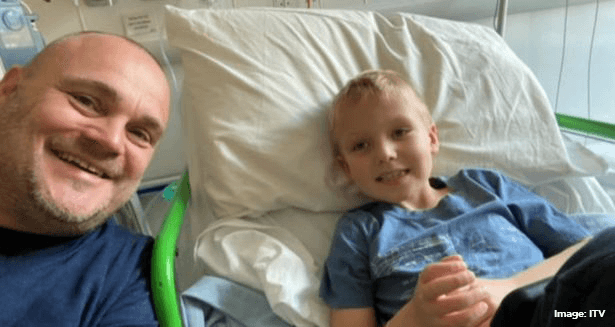
Comedian Al Murray publicly appealed for more people to consider joining stem cell donor registries after his six-year-old nephew, Finley, was diagnosed with juvenile myelomonocytic leukaemia (JMML).
Little Finley Relf suffers from juvenile myelomonocytic leukaemia (JMML), a rare slowly-developing type of blood disorder that only occurs in young children.
Currently, the only effective treatment for the majority of JMML patients is an allogeneic haematopoietic stem cell transplant. Murray told the BBC that Finley is undergoing “gruelling” chemotherapy but the best chance of him fighting the disease would be through a stem cell transplant.
The critically ill youngster has been told by doctors that he needs to find a donor for a blood stem cell transplant before Christmas. For children like Finley, finding a suitable stem cell donor isn’t always easy, which is why stem cell donor registries play such an important role.
Al Murray has been working hard to encourage more people to sign up and to raise awareness about the importance of stem cell transplants for children like Finley.
What is juvenile myelomonocytic leukaemia?
This rare blood disorder is characterised by the uncontrolled growth of white blood cells, which are abnormal and not fully mature. These abnormal white blood cells accumulate in the bone marrow, enter the blood stream and circulate around the body.
As such, the production and function of healthy blood cells is severely affected and the immune system and body’s ability to fight infection is weakened.
Whilst there is ongoing research investigating the factors that may result in this cancer, the exact cause of JMML is still unknown.
How can stem cells help to treat the disorder?
Children suffering from JMML can receive stem cells from a donor, who may be a closely matched family member or an unrelated donor.
Allogeneic stem cell transplants begin with an intense course of chemotherapy to kill off the JMML cells, which essentially resets the individual’s body. The donor’s stem cells are then transplanted through a drip into the bloodstream, travelling to the affected bone marrow where they begin to produce healthy blood cells.
These new stem cells effectively rebuild a healthy blood supply and immune system. Following treatment, approximately 50% of children with JMML achieve long-term remission.
To find out more about the powerful potential of stem cells, click here.
References
- Cancer Research UK, (2019) ‘Juvenile Myelomonocytic Leukaemia’, accessed on 18th November 2019, available at <https://www.cancerresearchuk.org/about-cancer/other-conditions/juvenile-myelomonocytic-leukaemia-jmml>
- The Argus, (2019) ‘Emotional Al Murray appeals for blood stem cell donors as nephew battles cancer’, accessed on 18th November 2019, available at <https://www.theargus.co.uk/news/18040867.emotional-al-murray-appeals-blood-stem-cell-donors-nephew-battles-cancer/>
- Rare Disease Database, (2019) ‘Juvenile Myelomonocytic Leukaemia’ accessed on 18th November 2019, available at <https://rarediseases.org/rare-diseases/juvenile-myelomonocytic-leukemia/>
Request an Info Pack
Find out more about cord blood banking by downloading an Info Pack now.