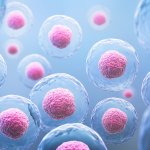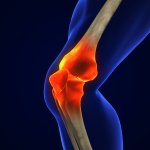
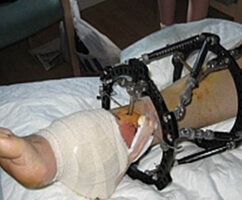
A man who faced losing his leg in a climbing accident saw it saved thanks to a revolutionary ‘glue’ made from stem cells.
Andrew Kent’s right leg was broken in five places by a falling boulder while he was climbing with his son in the Lake District, UK, in April. The 53-year-old was rushed to hospital, where the broken bones were pinned back together in three operations.
But his leg was still in a bad condition and the wound became seriously infected. He was transferred to the Spire Alexandra Hospital in Chatham, where Anan Shetty, orthopaedic surgeon, performed the stem cell treatment: the first in Britain.
It involved removing stem cells from the bone marrow in Mr Kent’s hip. The cells were then mixed with a collagen gel known as Cartfill.
This formed a paste that was smeared into the fractures. His leg was then placed in a metal cage, gently squeezing the broken bones back together.[1]
Kent Messenger 17th December 2009
Why is this relevant to the UAE?
Across regions such as the Middle East and North Africa, fracture injuries remain a significant cause of disability and place ongoing pressure on trauma services, reinforcing the need for continued advances in reconstruction and recovery strategies. [2]
Alongside traditional surgery, regenerative orthopaedic techniques are also used in specialist cases to support the body’s own healing processes. These may include stem cells taken from a patient’s bone marrow, sometimes combined with scaffold materials that provide a framework for new bone to grow.
In more complex injuries, particularly where large sections of bone are missing or previous operations have failed, surgeons may also use approaches such as the Masquelet technique. This involves creating a temporary biological chamber that supports new bone formation, sometimes supplemented with biologic treatments such as stem cell-rich concentrates. [3]
Together, these approaches form part of a broader field known as biologically assisted fracture repair, which aims to support bone regeneration in situations where conventional surgery alone may not be sufficient.
Learn more about stem cell usage?
Read our customer testimonials?
Need to know more before making a decision? Call our specialists now on 058 516 5494.
References
[1] https://www.kentonline.co.uk/kent/news/amazing-stem-cell-treatment-save-a90088/ [2] Hoveidaei, A. H., Nakhostin-Ansari, A., Namdari, S., Hosseini-Asl, S. H., Khonji, M. S., Selk-Ghaffari, M., Pouramini, A., & LaPorte, D. M. (2024). Increasing Burden of Upper-Extremity Fractures in the Middle East and North Africa (MENA): A 30-Year Analysis of the Epidemiology and Causes of Injuries. The Journal of bone and joint surgery. American volume, 106(4), 323–336. https://doi.org/10.2106/JBJS.23.00262 [3] Dilogo, I. H., Primaputra, M. R. A., Pawitan, J. A., & Liem, I. K. (2017). Modified Masquelet technique using allogeneic umbilical cord-derived mesenchymal stem cells for infected non-union femoral shaft fracture with a 12 cm bone defect: A case report. International journal of surgery case reports, 34, 11–16. https://doi.org/10.1016/j.ijscr.2017.03.002